
The Future of Power
Who Holds It, Who's Losing It, and What You Can Do About It
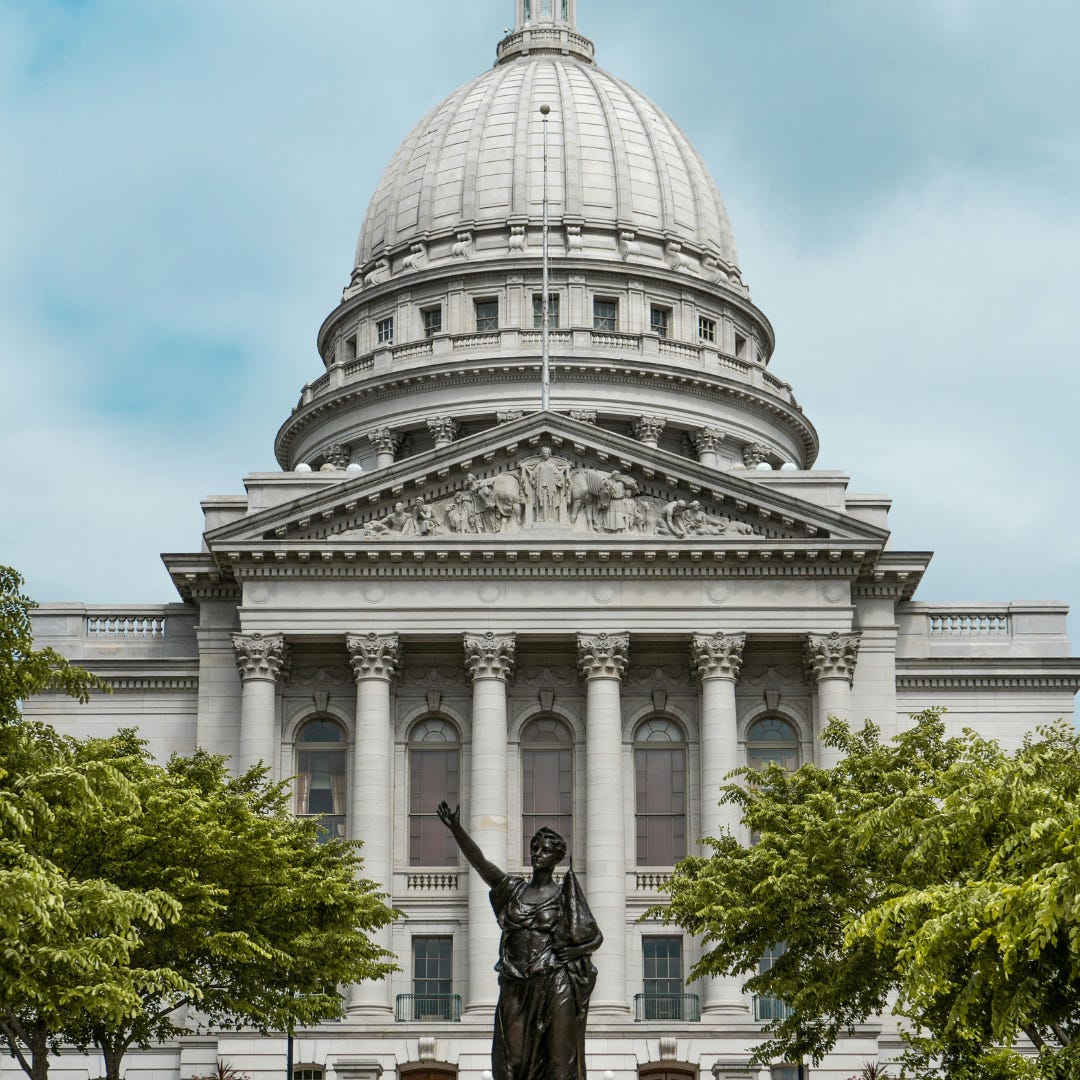
What do good and bad ideas, risk and opportunity, innovation and tradition, and freedom and suppression have in common? They all need some sort of energy to survive, grow, or resist. If you want to know how things really work and where they’re headed, you need to understand the energy, or power, behind them.
We live in a strange era where the old and new coexist; where various pressures enhance, compete, and conflict with one another. There’s a push and pull, a yin and yang, where multiple things are true at once making it challenging to understand the present, let alone the future.
In the olden days, we knew where power resided. It had an address: the palace, cathedral, elder’s lodge, newsroom, bank, and CEO’s office. You knew where to send your requests, complaints, prayers, and votes because power sat in a building, behind a title, enforced by a hierarchy that had been around for generations.
Power ran on scarcity and gatekeeping. A handful of actors controlled the bottlenecks everyone passed through. Corporations controlled capital, the means of production, supply chains, distribution, and shelf space. Those of us trying to make ends meet needed them far more than they needed any one of us.
Cities had power because that’s where the jobs, transportation, shopping, and culture were located. Governments made and enforced rules for our “own good” fueled by millions in lobbying dollars and big money influence. The news media, record labels, and movie studios decided the information and entertainment we consumed. Religious institutions provided meaning and moral authority.
Power was vertical. It flowed downward and your leverage was mostly a function of your position within the hierarchy. The whole architecture assumed information was expensive to produce and hard to move, so whoever controlled the pipes controlled the outcome.
All that exists today to varying degrees, but there’s also emerging power that isn’t as apparent. It’s invisible to the general public, scattered, and moving faster than our institutions, laws, and instincts can track.
While the structures and paradigms of the past haven’t disappeared, power is simultaneously decentralizing with more people building an audience, business, movement, and currency from nothing, and re-centralizing at a new layer where a small number of tech platforms mediate almost all the decentralized activity.
Many people still work in factories, hospitals, schools, and skyscraper office building cubicles, but there’s also remote work, the gig economy, and a generation that treats jobs as a temporary contract rather than 30 years and a pension. Fewer people derive their identity from the badge hanging from their neck. AI is starting to claw leverage back toward employers by making individual workers more substitutable in routine tasks, the first real threat to knowledge work bargaining power since the internet created it.
Trust in traditional government institutions has been declining for decades across most democracies, even as governments’ technical capacity to surveil, tax, and enforce has grown enormously. Change is in the air as political power increasingly flows through attention rather than party infrastructure. Ordinary citizens take to the streets and social media to hold politicians accountable, populist movements bypass traditional party structures, and city- and state-level policy divergence grows as national gridlock deepens.
A small number of platform companies now function as de facto governments of digital life. They write the law (terms of service), levy the tax (commission and ad rates), and control the courts (content moderation and appeals).
The press’s gatekeeping monopoly is essentially gone. Anyone with a phone can reach an audience once reserved for institutions with printing presses and broadcast towers. The collapse of local news, the rise of independent creators, and a growing trust migration from institutional brands to individual voices people feel they know are reshaping what influences our thinking.
Influence has become a genuine, tradeable form of power; parasocial trust that converts directly into economic and even political leverage, with none of the institutional accountability that was attached to public influence. Brands are shifting ad budgets from traditional media to creators, there’s a rise of creator-owned media companies, and a counter-trend increasing public fatigue with influencer culture and a rising premium on authenticity and expertise over pure reach.
Institutional religious affiliation has been declining across much of the developed world for years, even as the human hunger for meaning, community, and moral structure remains, if not grows.
Distribution is no longer scarce; attention is. The bottleneck moved from “can you reach people” to “can you get them to care.” Power now accrues to whoever can hold attention, not whoever owns the pipe.
Trust is migrating from institutions to individuals and small communities. People increasingly trust a specific person, creator, or tight-knit group over a branded, faceless institution, even when the institution is objectively more credible.
Optionality itself is becoming a form of power. In a world of volatile institutions, the ability to exit a job, platform, country, or relationship is increasingly as valuable as the ability to fight for change from within.
Verification is the next scarce resource. As AI makes content, credentials, and even people harder to distinguish from fakes, the ability to prove you’re a real human, real expert, or form a real transaction is becoming one of the most valuable assets there is.
It’s a muddy situation. In some ways the old power structures survive, maybe even strengthen, while new ways take hold. We can’t predict exactly where all this goes, but we can prepare ourselves. A few things to think about…
Diversify your dependence. Don’t let any single employer, platform, or income source be the only thing standing between you and financial ruin. A second skill, small audience, side income stream, or simply savings that buy you time all convert directly into leverage. They give you the power to walk away, if you choose, which is often the only real negotiating power.
Own a piece of your own distribution. An email list, a direct relationship with your customers or community, a personal brand independent of any one employer or platform are assets that can’t be deplatformed, laid off, or algorithmically deprioritized overnight the way rented attention can.
Build skills that compound with tech rather than compete against it. The safest place to stand in a labor market being reshaped by tech (including AI) is not doing the thing tech can already do, but directing, editing, verifying, and applying judgment beyond tech capabilities. Judgment, taste, and accountability are becoming more valuable, not less.
Invest in real, verifiable reputation. As trust migrates from institutions to individuals, your public, documented, and hard to fake track record becomes one of your most valuable assets. Do visible work. Let your results speak. Don’t hide your light.
Cultivate a real, non-digital community. Parasocial and platform-mediated relationships are fragile and often extractive. A small group of people who actually know you and will show up for you is a form of power algorithms can’t touch and platforms can’t repossess.
Choose your dependencies deliberately. You can’t avoid depending on institutions entirely, but you can choose which ones, diversify across them, and periodically ask which of your dependencies you’d regret if it disappeared tomorrow.
I’d love to say, “YOU HAVE THE POWER”, like some motivational speaker, but that wouldn’t be honest. You can’t grow enough food to feed your family within your small loft. You can’t stop paying taxes unless you want a real lesson in power. Unless you’re off-grid in Alaska, you’re dependent on systems you can’t fully control. However, you have more power than you think. You have the power to choose, and you can do a lot with that.

Such great tips here!
Loved this. So well articulated. Keep going